

Making an Entrance

I’m a big fan of architecture on ancient coins — not the front-facing temples you see everywhere, but innovative designs from the Roman provinces. So I was very excited to add the following piece to my collection: an affordable 25mm bronze from Nikaia — also spelt Nicaea, Nikæa, and Nikea — in Bithynia (northwest Turkey), boasting an impressive aerial view of the city’s walls.
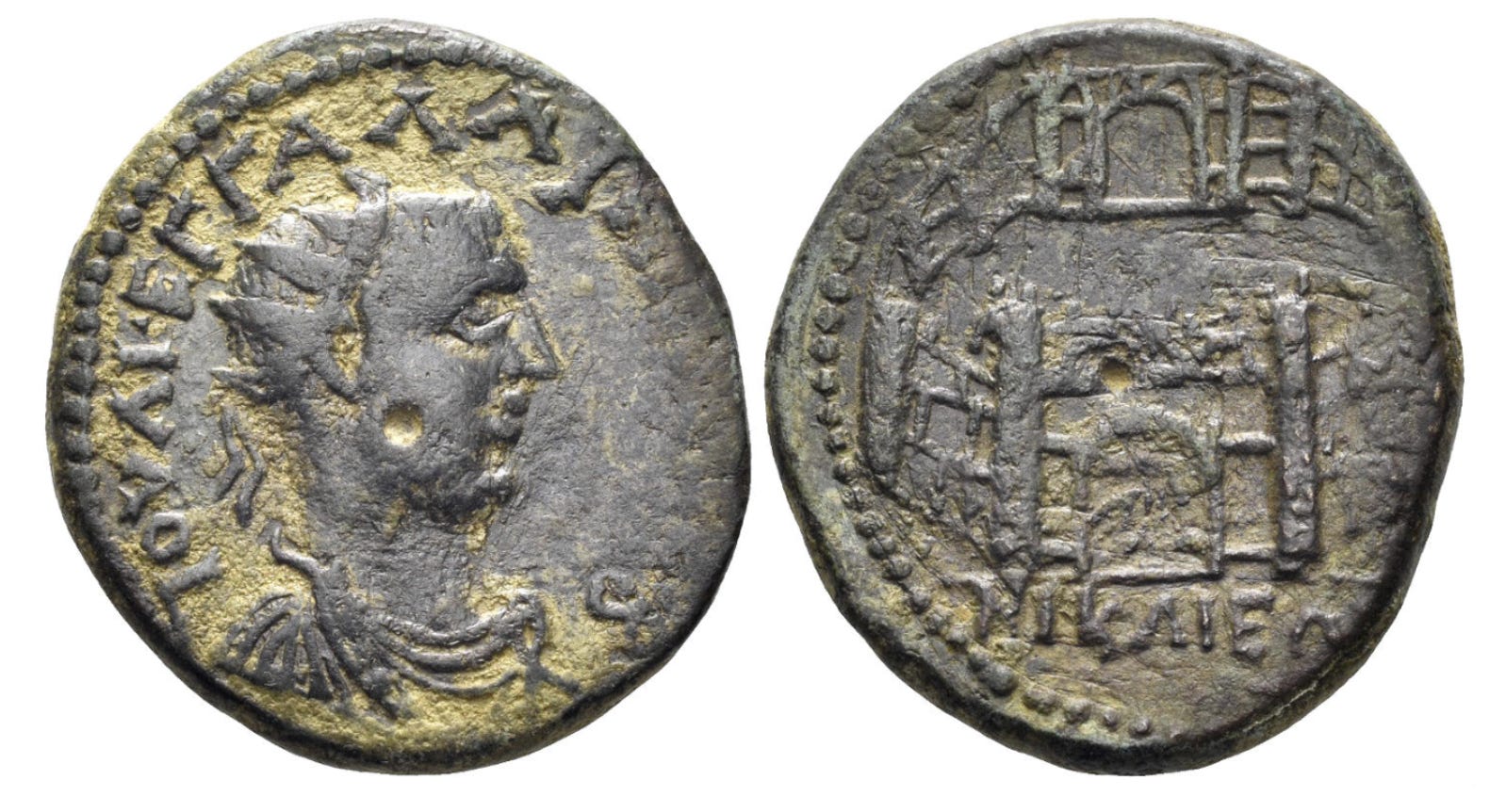
Bithynia. Nikaia. Gallienus. 253-268 AD. AE 25mm (8.14g). Obv.: ΠOY ΛI EΓ ΓΑΛΛIHNOC CЄB, radiate, draped and cuirassed bust right. Rev.: NIKAIEΩN, aerial view of the city-walls in the shape of an octagon; arched central gateways above and below. RG 848; Price/Trell S. 105, Fig. 190. VF.
First, you’ve got emperor Gallienus (r. 253-268 AD: 253-260 with his father Valerian; 260-268 alone) on the obverse, surrounded by a legend in Greek. Let’s have a quick go at figuring out what it means before we move on to the reverse; deciphering seems to intimidate collectors, but it’s lots of fun — and you certainly don’t need to be an expert at Greek…
Find the string of letters
Some letters are worn out on this example, but you can always compare with others online. We end up with something like this: “ΠΟΥΛΙΕΓΓΑΛΛΙΗΝΟΣΣΕΒ.”
Separate these into words
The interpuncts ⟨·⟩ between words really help. It’s looking a little less scary now: “ΠΟΥ ΛΙ ΕΓ ΓΑΛΛΙΗΝΟΣ ΣΕΒ.”
Lengthen abbreviated forms
There isn’t much space on a coin, so titles have to be heavily abbreviated. We’ve got proper Greek words at last: “ΠΟΥ[ΒΛΙΟΣ] ΛΙ[ΚΙΝΙΟΣ] ΕΓ[ΝΑΤΙΟΣ] ΓΑΛΛΙΗΝΟΣ ΣΕΒ[ΑΣΤΟΣ].”
Render in Latin
Strange, as a step? But the words on Roman provincial coins are translations and transliterations from Latin. All these words are in the nominative case, so we don’t have to think much — they all describe the same person.
ΠΟΥ[ΒΛΙΟΣ] — Publius
ΛΙ[ΚΙΝΙΟΣ] — Licinius
ΕΓ[ΝΑΤΙΟΣ] — Egnatius
ΓΑΛΛΙΗΝΟΣ — Gallienus
ΣΕΒ[ΑΣΤΟΣ] — Augustus
Interpret
Here, the first four words represent Gallienus’ full name: Publius Licinius Egnatius Gallienus. The last, Augustus, was a common title for the Emperor. Here’s what Doug Smith has to say about that:
“The first Emperor made the title (’Revered’) almost a personal name and it was assumed on ascension by each successive ruler. Until the late Empire, Emperors were both Caesar and Augustus but toward the end the title Caesar was dropped or reserved for the junior members of the imperial family.”
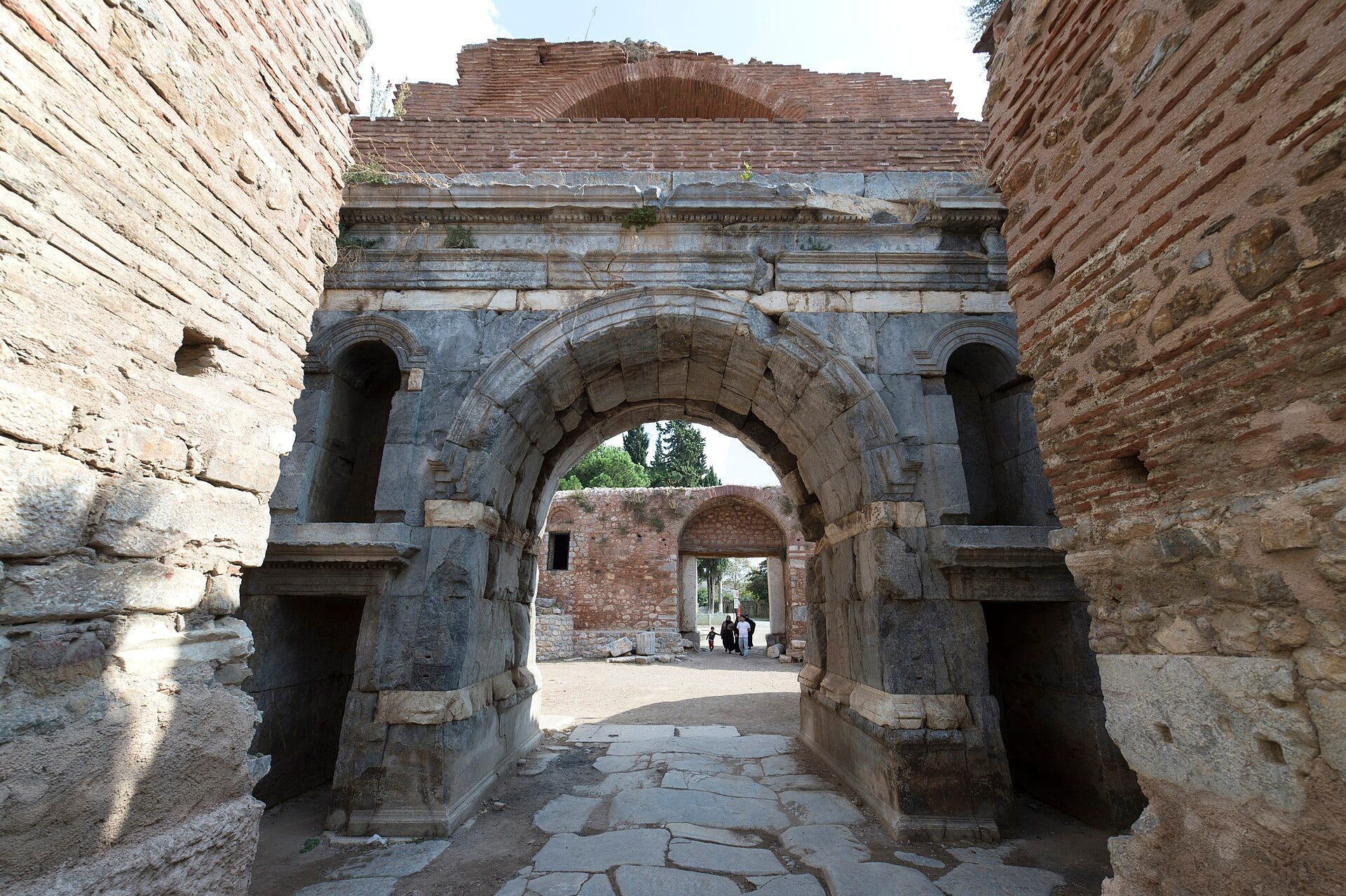
Ok, enough of that — onto the reverse. The legend here is more simple; it’s the city’s ethnic “NIKAIEΩN,” which means “[a coin] of the citizens of Nikaea.” What’s most exciting is that we can tie the depiction to a real historical site (photo below). These city-walls were built (fortified?) by Gallienus against the Goths, enough a source of civic pride to be featured on coinage. They’re impressive — 3,100m in circumference, up to 7m thick, up to 13m tall. You can also see the front and rear doors, with some nice detail; I’ll not deny that it isn’t the prettiest coin, but a 3d view of the entire city is awesome — and something you certainly wouldn’t find on earlier Greek coins, or Roman imperial issues.
If you’d like to learn more about Nikaia and its walls, including the city’s place in Byzantine history, here are my favourite articles:
https://romeartlover.tripod.com/Nicea.html
https://www.thebyzantinelegacy.com/nicaea-walls
https://toldinstone.com/the-walls-of-nicaea/
Hello there friend, great post, and given the relevance to my most recent article; I thought I’d drop a comment, introducing myself with said article:
https://open.substack.com/pub/jordannuttall/p/a-cartographic-view-of-tartaria?r=4f55i2&utm_medium=ios